

CHINESEORG × STARBAY|A CLOSER LOOK
Give every story its context.
Profiles, award records and historical articles each carry their own dates, subjects and sources. Our work for ChineseOrg starts with preserving that material, then organising it as a digital archive with clear categories and reading paths. Readers can discover a person and explore the background, while editors have a consistent structure for future additions.
Visit ChineseOrg- Project
- ChineseOrg
- Content
- People · Historical articles · Organisational records
- Audience
- Hong Kong and overseas Chinese communities
- Focus
- Content architecture · Digital organisation · Discovery
See the website in practice.
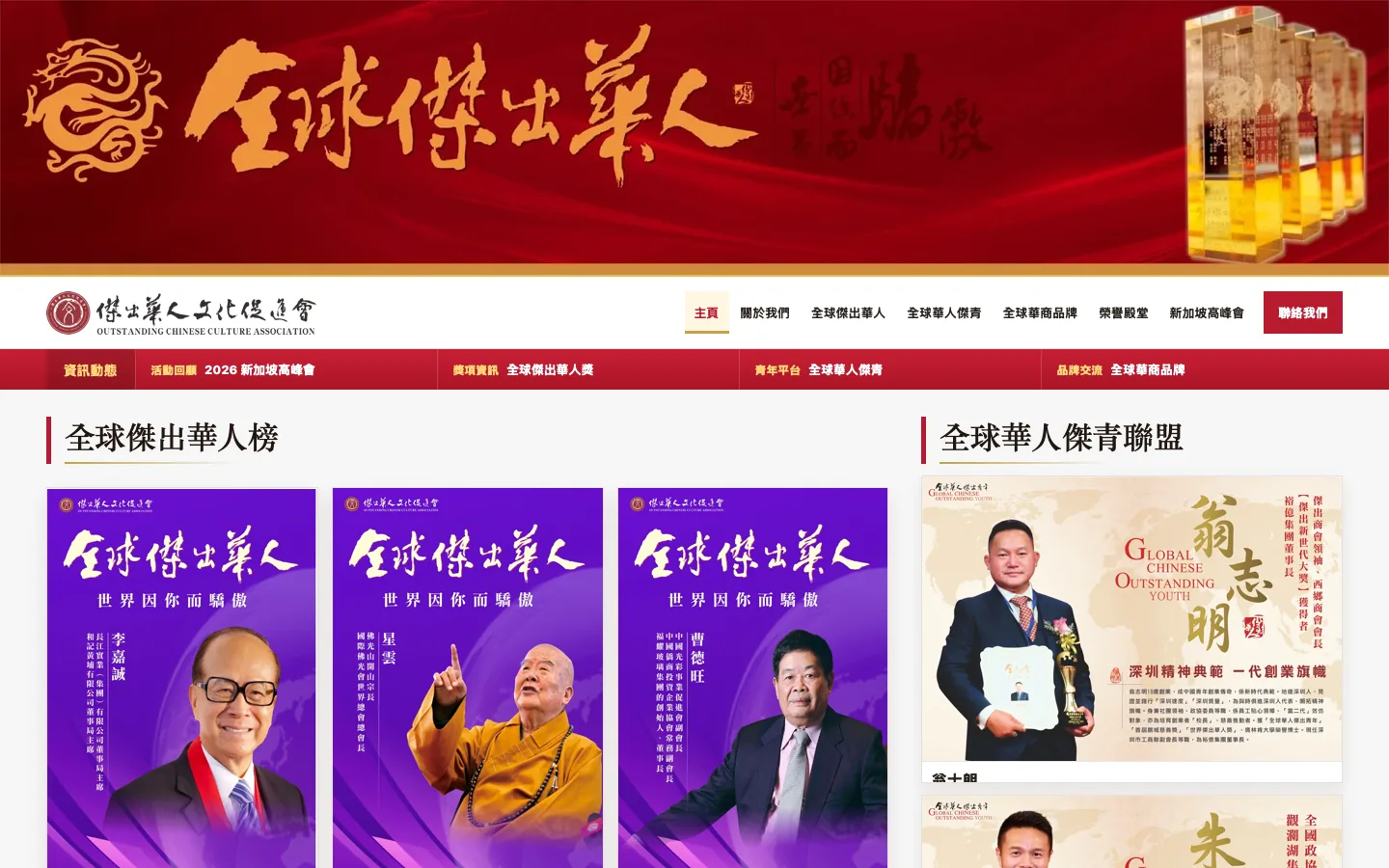
People as a starting point.
The website uses profile imagery and category entrances to help readers choose an area of interest before exploring the supporting records.
Visit ChineseOrgThe services we provided
We organised the information hierarchy and profile pages, giving existing material a place and new additions a consistent structure. Images, summaries, categories and search information work together.
- Website information architecture and navigation
- Profile content model and page layouts
- Preservation of historical articles and categories
- Image, summary and source organisation
- On-site search and sitemap structure
- Phased content expansion and editorial rules
Clear content. Practical workflows.
Give different records the right structure
A profile, a historical article and organisational information serve different reading needs. We organised their fields and categories so the archive is more useful than a single chronological feed.
- Name, summary and topic provide entry points to profiles
- Historical articles retain their context and categories
- Shared rules organise summaries, images and page information
A profile with room for the full story
Readers need a quick introduction as well as a route to more detail. A summary provides the starting point, with images and categories helping them choose what to explore next.
- Summaries establish the person and subject
- Images remain connected to their profile content
- Categories and further reading add relevant background
Preserve content and its existing paths
Digital organisation goes beyond a new layout. Existing articles, categories and public URLs are part of the archive, and the work keeps their relationship traceable.
- Check articles and categories against the existing material
- Organise page titles and information used for discovery
- Connect the archive through search and sitemap structures
A structure that supports future additions
New material can be added in phases. Sources, text and image-use conditions are checked before additions follow the same content structure.
- Organise profile and topic material in manageable phases
- Review sources and image rights before publication
- Keep the relationship between existing and new material clear
From reading to the next step.
The website centres on organisational content and cultural records: help readers find people and topics, explore the fuller material and build an understanding of the organisation over time.
Choose a topic
Start with a person, historical subject or organisational section.
Read the introduction
Understand the subject and context through a short summary.
Explore the record
Read the full content alongside images and supporting information.
Continue discovering
Use categories, search and related material to keep exploring.
Preserving content and extending cultural memory.
Established
Website and content structure
Profile pages, article categories and reading entrances form the digital archive foundation.
Developed in phases
Existing content organisation
Historical material is retained while summaries, images, categories and sources are reviewed.
Added as sources become available
Further records
New profile and topic material follows source and image-use review.
The archive develops from available material, with sources reviewed before content and images are added.